
How Milton Berg Called the Gold Top — and Why He Thinks It Lasts
In January 2026, with the world certain gold was going higher, Milton Berg woke in the night, looked at the futures, and told his wife they were selling their gold. He sold that day — the day of the high. The interesting part is not the timing. It is what convinced him.
Free notes from Milton Berg's desk
Occasional free reports and market notes — straight to your inbox. No spam.
The night he sold
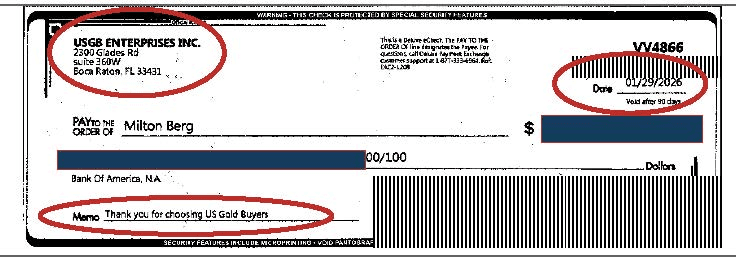
The story is the kind that sounds invented until someone produces the receipt, which in his case was the check from the dealer.
Overnight on 29 January 2026 he looked at the futures market, woke his wife, and said the gold had to go. He sold his personal metal that morning and his firm recommended clients short. It proved to be the day of the high — a fact his interviewer volunteered rather than one he claimed.
By itself a well-timed sale is anecdote. What makes it useful is that the reasoning was written down beforehand and can be checked.
The evidence was ratios, not charts
Berg's case did not rest on a pattern on a gold chart. It rested on comparing gold to the other things that are supposed to move with inflation — because the entire bullish argument at the time was that inflation was coming.
His test was simple: if gold is rising because money is losing value, then the other assets that respond to inflation should be rising with it. They were not.
- Gold against crude oil reached its highest ratio in history. Oil is also a commodity that moves with inflation — so why was one at an all-time extreme against the other?
- Gold against the median price of an American home stood near its highest ever. Housing responds to inflation too.
- Gold against consumer prices was around twice its 1980 peak — the previous great inflation top.
- Gold against ordinary goods told the same story. An ounce bought more cans of Coca-Cola, more chocolate bars and more loaves of bread than at any point in history.
Set side by side, the conclusion was hard to avoid: gold was not anticipating inflation. Gold had run far ahead of inflation, because everyone believed inflation was coming. There was also a rare technical marker on the night itself — spot gold, which trades around the clock and almost never gaps, gapped up into the high and reversed.
One long-run figure anchors the whole argument. Over roughly a century in the United States, gold has outpaced inflation by only about one and a half percent a year. A metal trading at multiples of its historical relationship to prices is not pricing in inflation; it is pricing in a belief.
Why he thinks this one lasts
Berg draws a distinction that matters for anyone holding gold today: this was not, in his reading, a trading top but a long-term one.
His precedent is 1980. Gold relative to consumer prices peaked, and what followed was a twenty-year bear market in gold — and here is the detail that does the work — even though inflation itself doubled over that stretch. Being right about inflation was not enough to make gold pay, because gold had already priced in far more than arrived.
His current position follows from that: a long-term bear market in gold and silver, with strong rallies inside it, and no new highs expected. In his own words, he does not think new highs are coming, but he does expect retracement rallies — some of them large.
“I say we're in a bear market in gold. I don't think we can make new highs, but I think we will have retracement rallies.”
What to take from it
You do not have to share his gold view to use the method. The transferable idea is the test he applied: when an asset is being bought for a stated reason, check whether everything else that reason implies is also happening. If gold is rising on inflation, inflation-sensitive assets should confirm it. When they refuse to, the story is doing the work rather than the evidence.
That is the same instinct applied at market lows, only inverted — and it is where the MB Edge model puts its precision, because a low leaves evidence you can measure while a story leaves none.
Watch the full conversation
The gold discussion runs from roughly the seventieth minute of Milton Berg's August 2026 interview with Jack Farley on Monetary Matters.
Frequently asked questions
When did Milton Berg call the top in gold?
On 29 January 2026. He sold his own physical gold that morning after looking at the overnight futures market, and his firm recommended clients position short. It proved to be the day of the high.
What made him think gold had topped?
Ratios rather than chart patterns. Gold stood at its highest ever level against crude oil, near its highest against the median US home price, and around twice its 1980 peak against consumer prices — while the bullish case rested on inflation that those same assets were not reflecting. Spot gold also gapped up into the high and reversed, which is rare in a market that trades around the clock.
Does Milton Berg think gold will make new highs?
He does not. He describes a long-term bear market in gold and silver with strong retracement rallies inside it, drawing on 1980, when a peak in gold relative to consumer prices was followed by a twenty-year bear market even though inflation doubled over the same period.
Has he been wrong on gold since?
Yes, and he says so himself. He traded the long side after the top and was wrong, and exited gold, silver and mining shares days before a sharp rally he then missed. He distinguishes the long-term view, which he still holds, from short-term trades within it.
This article draws on Milton Berg's August 2026 interview with Jack Farley on Monetary Matters, and on his July 2026 interview with David Lin. Quotations are Berg's own words.
MB Edge publishes a long-term market model. Model results before May 2025 are backtested and hypothetical, do not represent actual trading in any client account, and are not a guarantee of future results. This article is educational commentary only — it is not individualized investment advice or a recommendation to buy or sell any security.
Read the full disclaimers